Few things in home tech are more universally frustrating than a printer that decides today is not the day. You need to print a shipping label, a boarding pass, a permission slip, and the printer is broken again. It's usually one of the same five things.
Check the offline status and default printer
Both Windows and macOS will flip your printer to "offline" or swap the default to something else — usually "Microsoft Print to PDF" or a printer you used once at an old job three years ago.
On Windows, go to Settings, then Bluetooth & devices, then Printers & scanners. Find your printer, click it, and if it says offline, right-click and choose "Use printer online." Set it as the default while you're in there. On a Mac, go to System Settings, then Printers & Scanners, and make sure the right printer is selected and not paused.
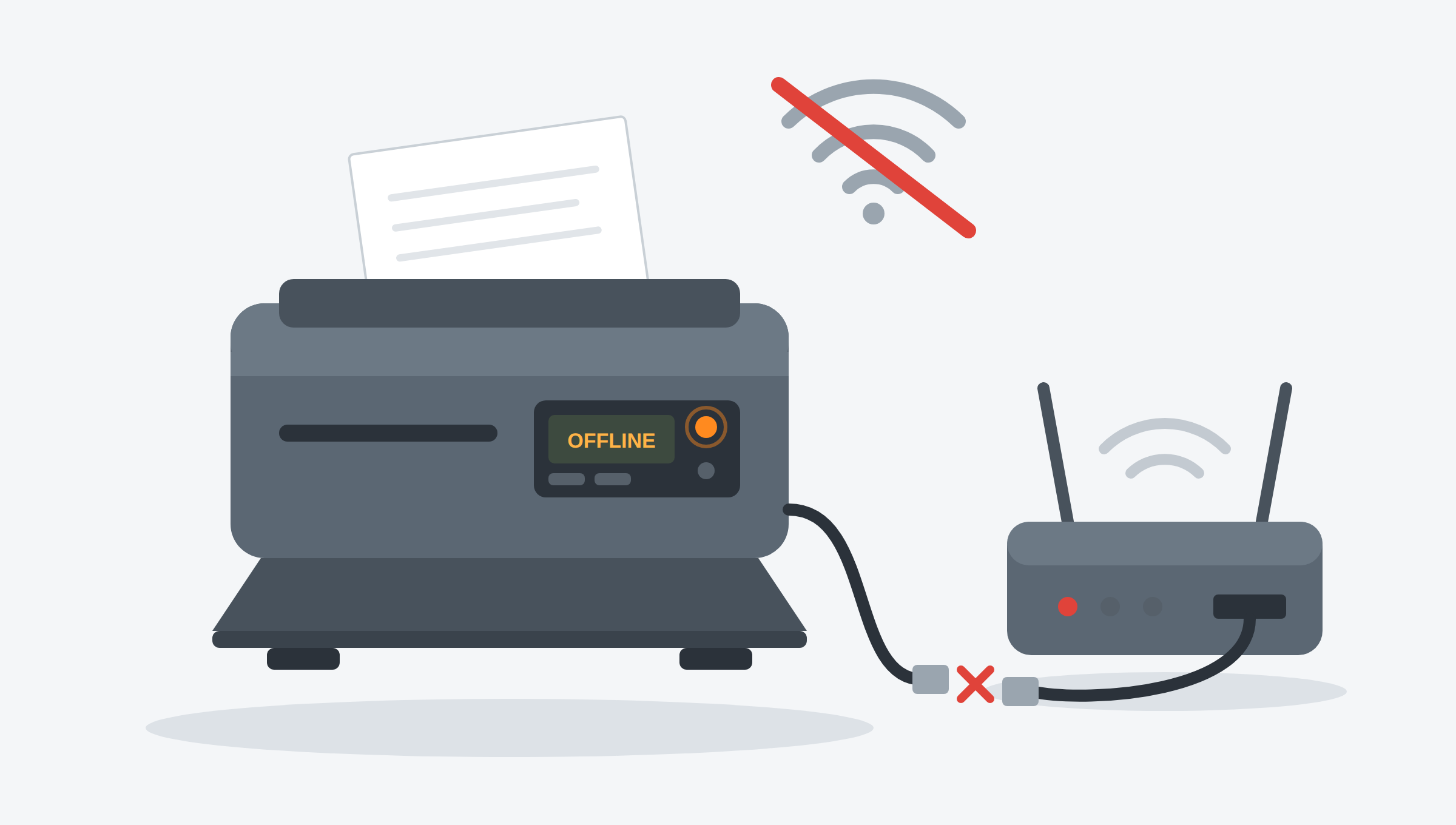
Reconnect the printer to wifi
Wireless printers lose their wifi connection regularly. The router reboots overnight, the printer wakes up confused, and your computer can't find it. Print the network status page from the printer's own menu and confirm it has an IP address on your network.
If it doesn't, power-cycle both the printer and the router: unplug the router for 30 seconds, plug it back in, wait for it to fully come up, then turn the printer off and back on. A printer that still won't reconnect after that needs to be re-added through its setup app or the manufacturer's mobile app.
Clear the stuck print queue
If you've hit print five times because nothing was happening, you now have five jobs stacked up in the queue and the first one is stuck. Nothing prints until that first job clears or gets cancelled.
Open the print queue — on Windows, click the printer in Settings and choose "Open print queue"; on Mac, double-click the printer in Printers & Scanners — and cancel every job in there, then try printing one fresh document. If the queue refuses to clear, restart the computer, which almost always clears it.
Replace the low cartridge
Most consumer inkjets refuse to print anything, including a black-and-white text document, if any color cartridge reads low — not empty but low enough to trigger the lockout. Check the ink levels on the printer's screen or in its software. Replacing the low cartridge usually gets you printing again immediately. Some printers have a setting in the maintenance menu that lets you override this and print anyway, but not all of them do, and it isn't always easy to find.
Replacement cartridges for most popular inkjet models are available on Amazon, often for less than the manufacturer's retail price.
Reinstall the printer driver
Windows Update and macOS upgrades both break printer drivers without warning. Everything worked yesterday, the computer updated overnight, and now the printer won't print.
Go to the printer manufacturer's website — HP, Brother, Epson, Canon — find your exact model, and download the latest driver for your operating system. Uninstall the old printer from your settings first, install the new driver, then re-add the printer. This takes about 15 minutes.
Consumer inkjets
If you ran through all five and the printer still won't cooperate, consider whether the printer is worth fixing. Consumer inkjets are built around ink sales: the cartridges are chipped to expire and the firmware nudges you toward replacing the printer. If you print fewer than about 10 pages a month, a cheap monochrome laser printer is a more practical choice. A Brother laser runs a bit over $100, and the toner cartridge lasts for years of light home use.
Leave a comment